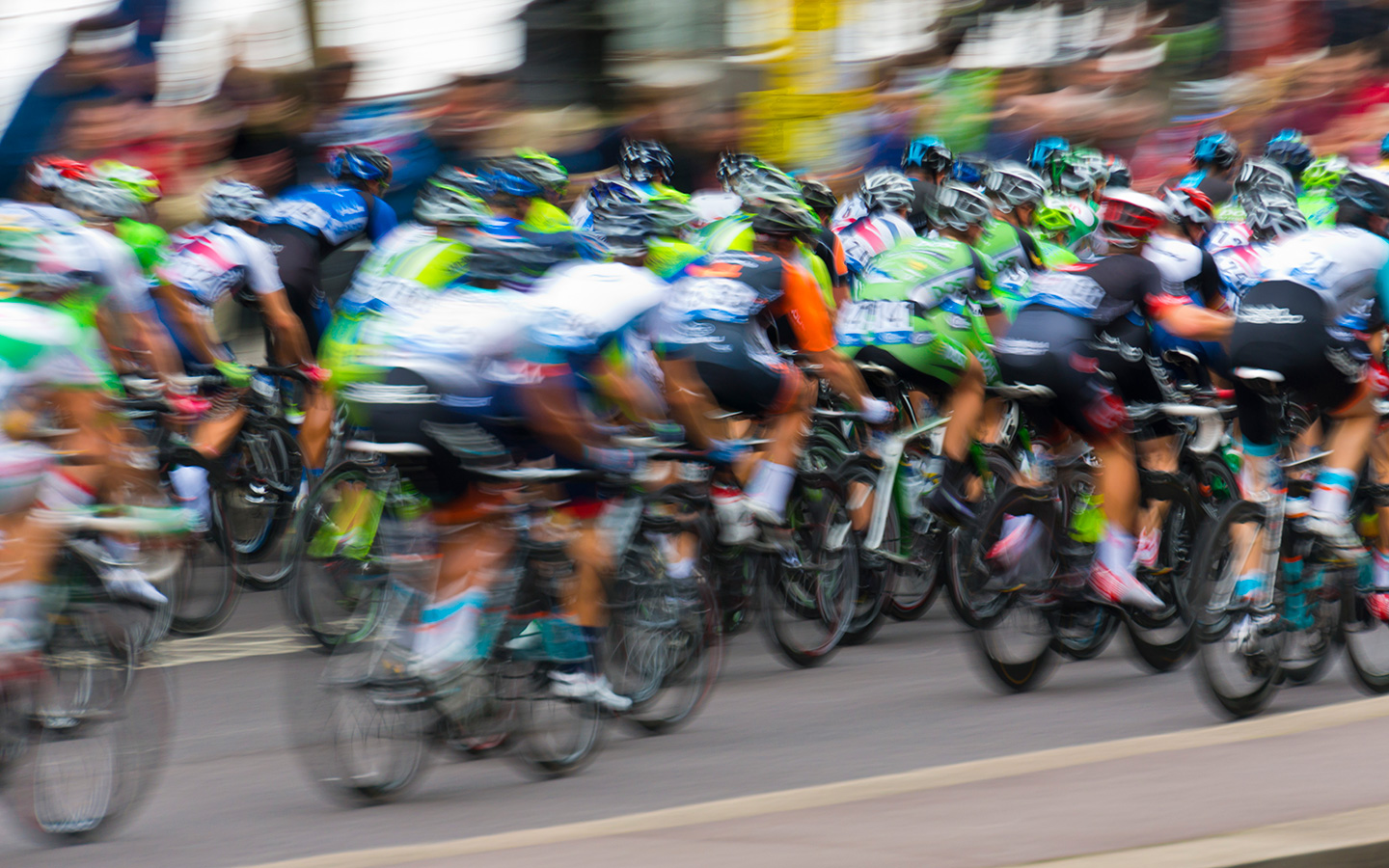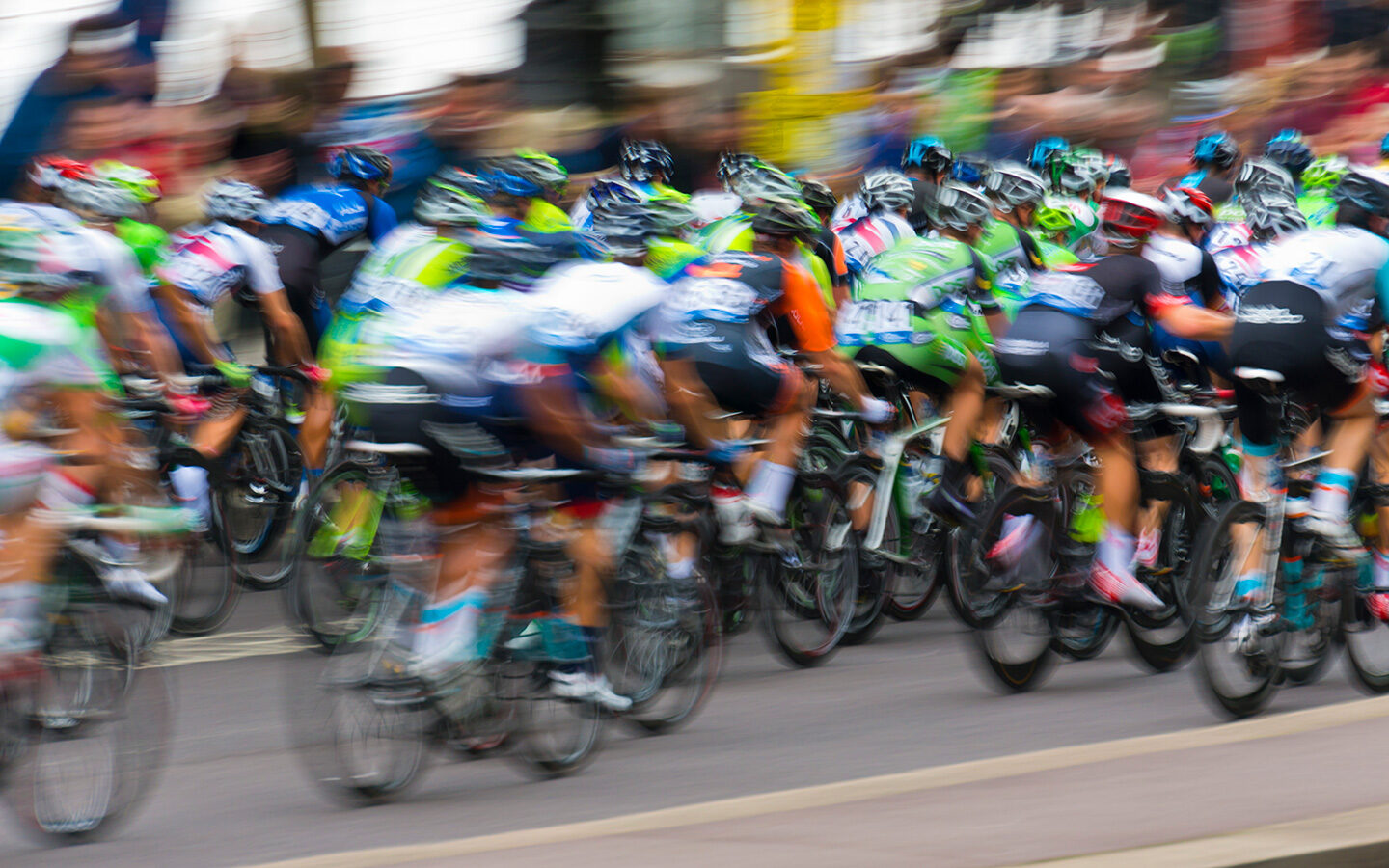
At first glance, the peloton can look like controlled chaos: dozens of riders moving as one, attacks firing off, decisions made in seconds. But very little is random. Every rider has a role, every team follows a plan, and most moves are part of a bigger strategy. Once you understand that, you stop just watching bikes go by and start actually reading the race.
Do all riders play the same role in a race?
In most cases, they don’t.
Only a few roles stay consistent from race to race, like a pure sprinter or a Grand Tour leader. Other riders, even some of the biggest names, often shift depending on the situation. Riders like Mathieu van der Poel or Wout van Aert are more than capable of winning, but have also spent plenty of days working for teammates.
Even though everyone lines up in the same race, not everyone is there to win. Most riders are racing for a shared objective, even if the result only shows one name.
Within each team, there’s usually a clear hierarchy set before the race starts, but it can change quickly. Crashes, breakaways, crosswinds… Anything can force a rethink. Some teams line up with a single leader, while others keep multiple options open depending on how the race unfolds. A few riders are given freedom to go for results, while others are there to make that possible.
Who is the team leader?
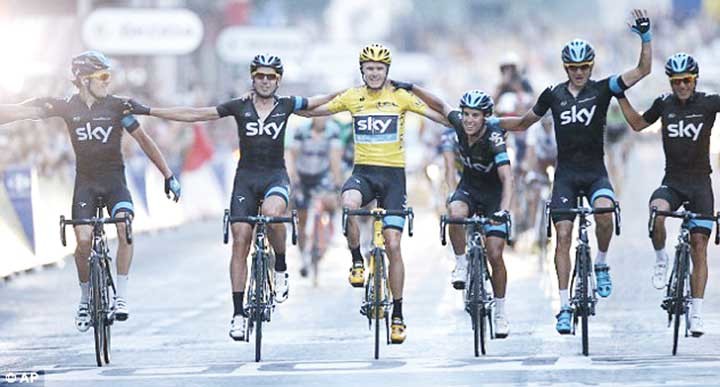
The leader is the rider the team backs for the main objective: overall classification, a stage win, or a specific race.
Everything revolves around them. If they have a mechanical, the team waits. If conditions get tough, teammates step in to protect them, whether that means positioning in the wind, pacing on climbs, or bringing supplies from the team car. As long as the leader is in contention, they remain the focal point of the strategy.
In Grand Tours, for example, riders like Tadej Pogačar, Jonas Vingegaard, or Remco Evenepoel are clear contenders for the overall. At the same time, their teammates may still have opportunities to chase stage wins along the way.
What exactly is a domestique?
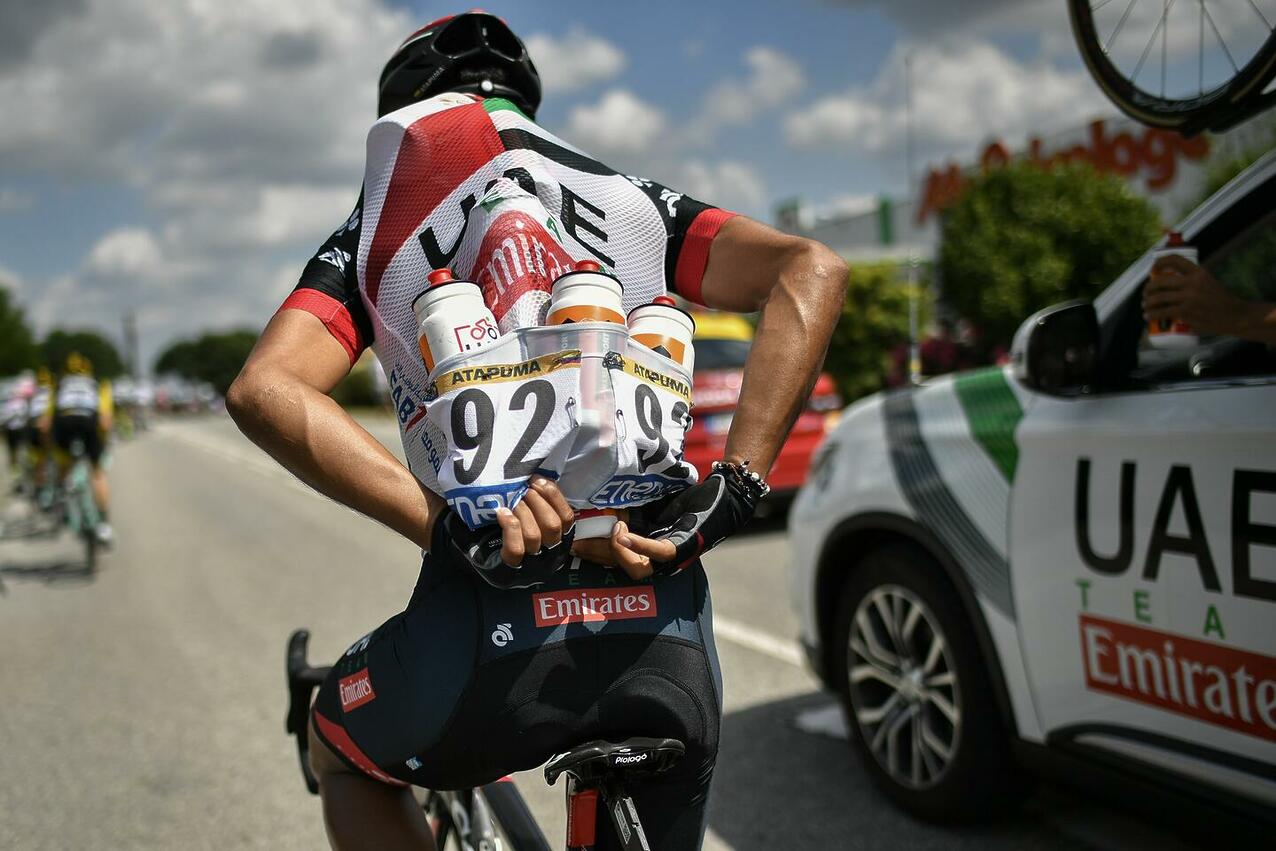
A domestique is a rider who works for others.
That role can take many forms: shielding the leader from the wind, fetching bottles from the team car, setting the pace in the peloton or on climbs, chasing breakaways, or covering attacks.
They rarely get the spotlight, but they’re essential. Without strong support, no leader makes it far. In cycling, results come down to both individual strength and team execution.
What types of riders are there in road cycling?

A rider’s physical and technical profile defines where they perform best. Understanding these profiles makes it much easier to anticipate how a race might play out.
- A climber is lightweight and efficient on long or steep ascents. They thrive in the mountains and uphill finishes, where power-to-weight ratio is key. They’re often central to the fight for overall standings in Grand Tours. Think Jonas Vingegaard or Tadej Pogačar.
- A sprinter is the fastest rider over short distances. Their specialty is flat, high-speed finishes where everything is decided in a few seconds. In return, they tend to struggle in the mountains. Examples include Jonathan Milan, Tim Merlier, and Jasper Philipsen.
- A versatile sprinter still has top-end speed but can also handle short climbs or rolling terrain. That opens up more opportunities across a season. Riders like Peter Sagan or Michael Matthews fit this profile.
- A time trialist is powerful, consistent, and aerodynamic. They excel in long solo efforts against the clock and are often key in controlling the pace on flat terrain. Think Remco Evenepoel or Filippo Ganna.
- A rouleur is strong and durable, capable of holding high speeds for long periods. They’re crucial for chasing breakaways, setting tempo, and protecting leaders in the wind. Riders like Tim Declercq, Domen Novak, or Silvan Dillier are classic examples.
- A puncheur is an explosive rider who excels on short, steep climbs. They don’t need long mountains to make a difference; their terrain is punchy hills, sharp ramps, and technical finishes. They often shine in one-day races and rolling stages. Think Julian Alaphilippe or Alejandro Valverde.
- A classics specialist focuses on one-day races. They combine power, endurance, and bike-handling skills, whether on cobbles or rolling terrain. Riders like Mathieu van der Poel or Mads Pedersen are built for this.
- The last lead-out rider is the most important support rider in a sprint train. Their job is to deliver the sprinter into the final meters in the best possible position. It requires speed, precision, and perfect timing. Riders like Bert Van Lerberghe or again Mathieu van der Poel in support roles are key here.
- A climbing domestique is a strong climber who sacrifices personal results to set tempo in the mountains, reduce the group, and support the leader deep into key stages. Think Sepp Kuss or Jay Vine.
- An all-rounder doesn’t dominate one terrain but performs well across most of them. This is one of the most valuable profiles in modern cycling thanks to its versatility. Riders like Nils Politt, Bruno Armirail, or Jan Tratnik fit this mold.
Teams build their lineups by combining these profiles depending on the race and course. Many riders overlap categories: a rouleur can also be a strong time trialist, a classics rider can double as a puncheur. Some riders even combine three or four skill sets. Versatility is highly valued, but specialization still plays a key role.
How is race strategy planned?
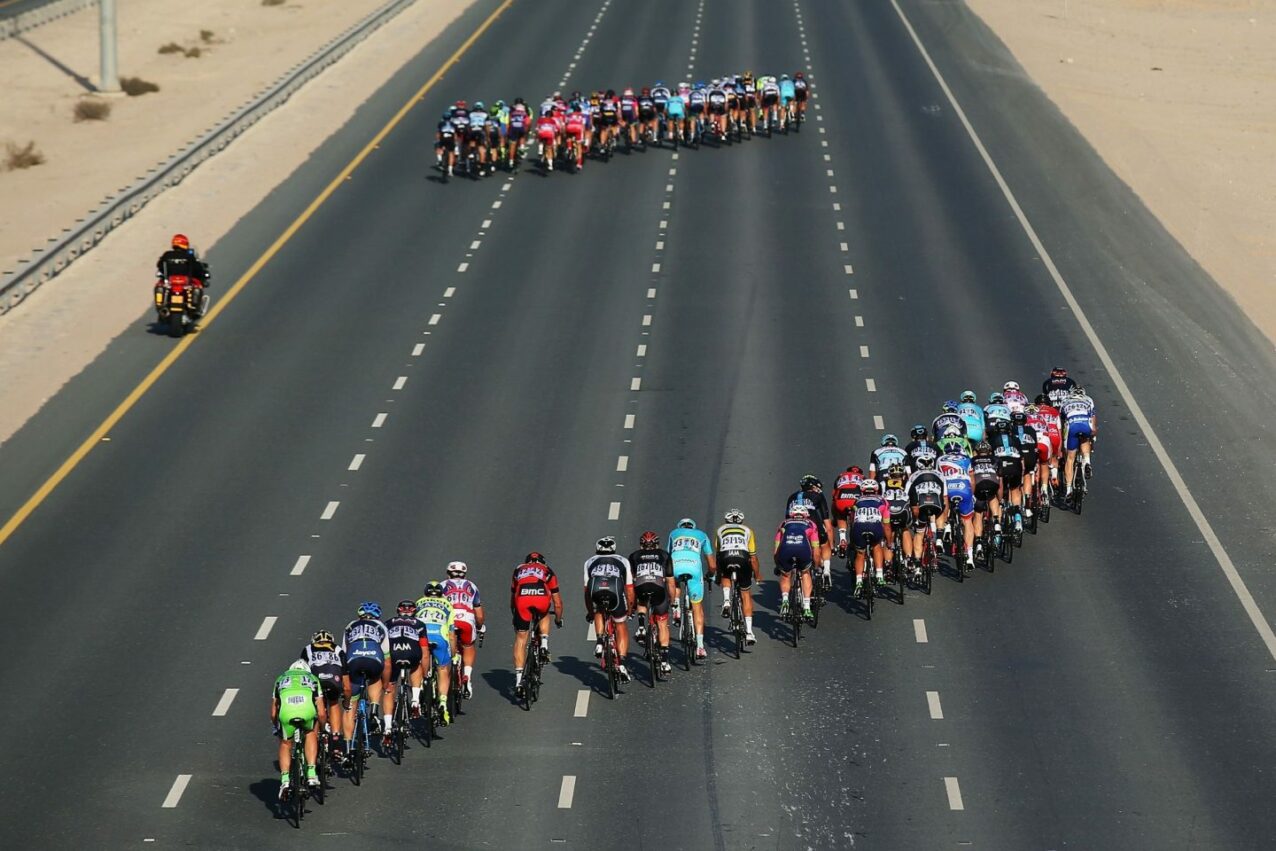
Strategy starts well before race day.
For Grand Tours, teams begin planning as soon as the route is announced. For one-day races with fixed courses, preparation often focuses on the days leading up to the event, especially to assess weather and wind conditions.
Sports directors analyze the route, stage profile, wind, rivals, and the form of their riders to define a plan with one or more objectives. That plan is then shared with the team, often incorporating rider feedback and experience.
From there, key decisions are made:
Whether to control the race or let a breakaway go.
Where and when to attack.
Who leads, and whether there are backup options.
Which rivals need to be closely marked, and which can be allowed some freedom.
Even with detailed planning, cycling always leaves room for adaptation. Races evolve in real time, and teams have to react.
That’s what makes cycling so strategic. The strongest rider doesn’t always win. The winner is often the one who reads the race best: knowing when to push, when to wait, and when to make a move.
That’s also why no two races play out the same, even on identical courses.
What is a breakaway and why does it sometimes succeed?
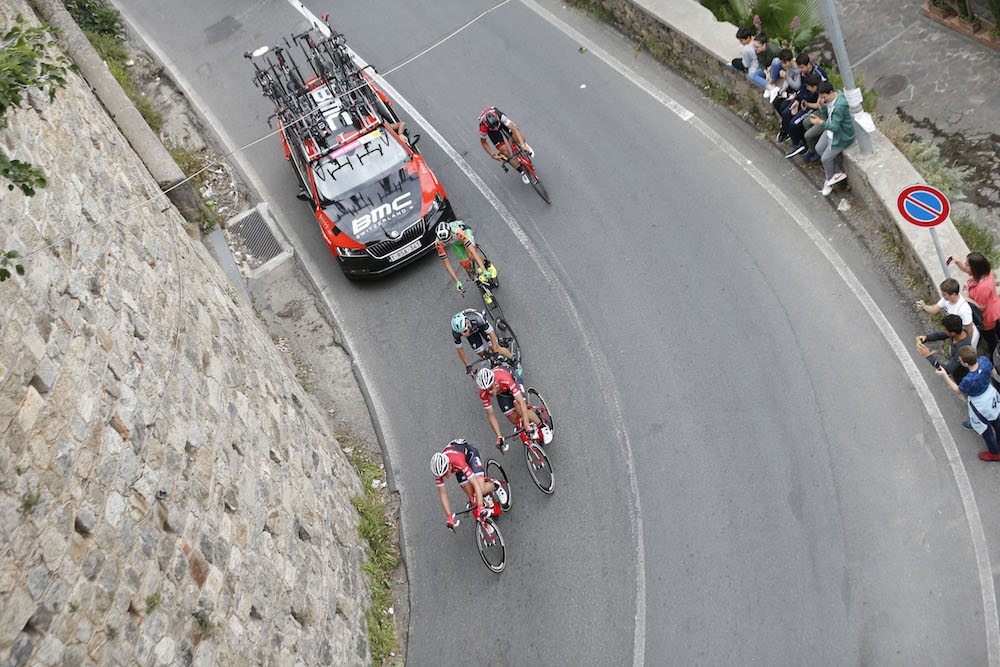
A breakaway is a group of riders that gets ahead of the peloton.
Sometimes it’s allowed to go because it’s not seen as a threat. Other times, no team wants to take responsibility for chasing it down.
If the peloton hesitates, the gap grows. And if the break is given too much time, it can stay away all the way to the finish.
It’s not the most common outcome. On flat stages, sprint teams usually control the race, and in the mountains, GC contenders drive the pace. Breakaways tend to have their best chances on rolling terrain, where controlling the race is more difficult.
How does a sprint train work?
In bunch sprints, teams organize what’s known as a lead-out train.
Several teammates position themselves around their sprinter and gradually increase the pace in the final kilometers, fighting for position.
Each rider pulls at full effort, then swings off once their job is done, leaving the next teammate to take over. The goal is to deliver the sprinter into the final 150–200 meters at top speed and in the perfect position.
When it works, it looks smooth and controlled. When it doesn’t, things fall apart quickly. A sprinter can get boxed in, be forced to launch too early, or unintentionally lead out a rival who follows their wheel and uses the draft.
Everything happens in seconds. The smallest decisions in the final moments can be the difference between winning a stage and losing by inches.
How do riders communicate during a race?
Riders use race radios to stay in contact with each other and with the team car. They receive key information: time gaps, warnings, tactical instructions, or changes in strategy.
But not everything comes through the radio. Within the peloton, communication also happens through movement, positioning, signals, and instinct. Experience plays a huge role in reading what’s happening and reacting without needing words.
What’s next?
Now that you understand roles, hierarchy, and how decisions are made in a race, the next step is to look at the cycling calendar: why certain races matter more than others, how the season is structured, and what makes the Tour de France stand apart.
That’s where everything starts to come together.